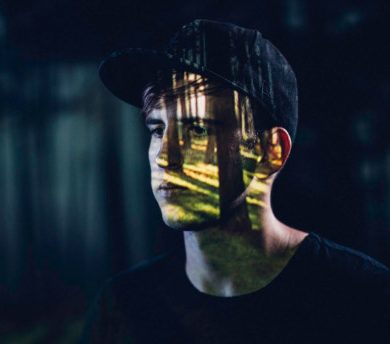
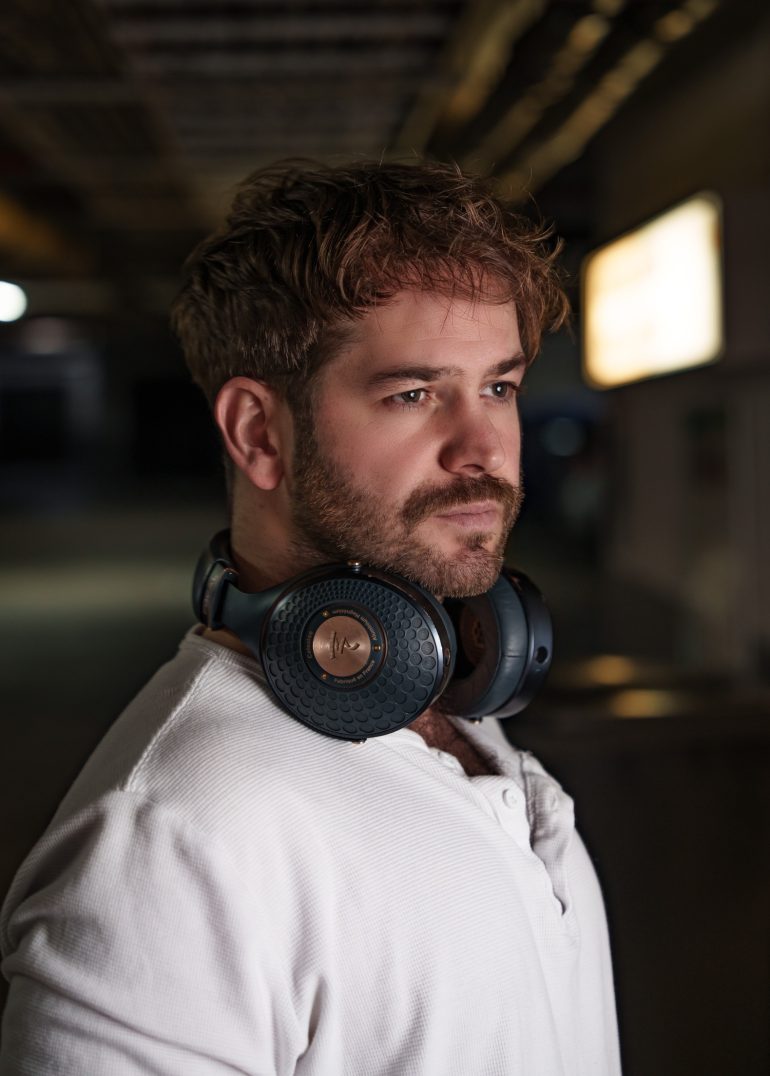
Producer and DJ Craig Oram joins us at a pivotal moment in his career. He’s just announced the release of his new EP, Work It, landing on Polyptych Limited Record Label; a project that marks a clear evolution in his sound. The two-track release introduces a refined direction, balancing underground energy with polished production, and represents a natural next step in Craig Oram’s growth as both a producer and performer.
Hi, Craig! How are you?
I’m doing great. I just turned 31 on the 12th and I’m feeling genuinely grateful for how things are going right now. It’s been really nice to be releasing music again, and I’ve just come back from a holiday in Cape Town that was completely filled with music and inspiration. I’ll be spending New Year in Sydney too, so honestly — I can’t complain.
What sparked the initial idea behind the ‘Work It’ EP, and how did the concept develop as you began producing the tracks?
The two tracks were actually created separately, without an initial plan for an EP. At the time, my only goal was to make music inspired by what I was listening to in that moment and to stay productive creatively. Once both tracks were finished, Polyptych LTD felt they worked well together and suggested releasing them as an EP, which made complete sense to me.
Did you approach this EP with a specific narrative, vibe or intention in mind, or did the tracks evolve naturally from experimentation?
It was very much a natural process driven by experimentation rather than a fixed concept. ‘Didn’t Come To Party’ started out as an attempt to make an underground, punchy Tech-House track. I’d just downloaded Trilian and the Arturia V Pack, and those two together ended up forming the bass and acid elements you hear in the track.
The vocal sample was originally from a much faster DnB track — around 170 BPM — but once I slowed it down and started experimenting around it, the final direction began to reveal itself organically.
For ‘Work It’, I remember consciously deciding not to overthink things. I hadn’t made a melodic Techno-style track in a while, so I focused on a simple, but powerful groove built around the bassline. I used Dune 3 for this track — it’s a synth I’ve been using a lot recently, and I love how quickly I can get solid, robust sounds from it.
How does ‘Work It’ reflect where you currently are creatively compared to your previous releases?
With ‘Didn’t Come To Party’, things were starting to click technically, but I was also guilty of overproducing and chasing perfection. Around that time, I was going through the ‘Mix With Varti’ course and having online sessions with Fab Massimo, which was hugely beneficial, but the track ended up taking several months to finish.
With ‘Work It’, I deliberately stripped things back and refocused on fundamentals. I approached it in a much more instinctual way — very raw, minimal processing, minimal plugins, and no heavy-handed mixing. I actually finished the track over two night shifts at work, which felt refreshing. After that, I sent it to Baikonur Recordings for mixing and mastering, who did an incredible job.
Walk us through your production process for the EP, did all the tracks start from rhythm, melody, sound design, or something else entirely?
Most of the time, I’ll start with a solid kick and bass groove. From there, I try to find a vocal hook or phrase that naturally fits the rhythm. If the vocal doesn’t sit well, I’ll adjust its placement, so it enhances the groove rather than competing with it. Once that foundation feels right, I’ll build out the main theme using call-and-response ideas and melodic synths — this was very much the case with ‘Didn’t Come To Party’.
The process for ‘Work It’ was similar, but I applied what I’d learned from the previous track. I paid much more attention to groove, simplicity, and sound selection. Instead of relying on long plugin chains, I focused on choosing the right drum samples and synth patches from the start, aiming to achieve the desired sound at source.
Did you push yourself into any new territory, creatively or technically, while making ‘Work It’?
Yes, I think that was the point where real confidence in my own decisions started to emerge. With ‘Work It’, the track came together in a way that felt powerful, but effortless, which was new for me. It helped me recognize how overthinking had been holding me back, and from that point on my creative and technical approach shifted significantly.
Are there particular artists, environments, or experiences that influenced the direction of these tracks?
Definitely. I’d been listening to CADELAGO (ARG) a lot at the time, and his blend of Tech House and Indie Dance really resonated with me — especially on ‘Didn’t Come to Party’.
For ‘Work It’, an unreleased Adam Sellouk track called ‘Make You’ had a big impact. I was drawn to its momentum, simplicity, and clarity of sound choice. It made me want to explore a similar energy while putting my own spin on it
How did working on this project push you creatively or personally?
Working on this EP forced me to slow down and become more intentional. I realized I sometimes over-complicate things when the strongest moments often come from simplicity, groove, and restraint. Creatively, it helped me trust my instincts more and commit to ideas instead of endlessly tweaking. Personally, it gave me confidence that my sound stands on its own when I let it breathe.
Did creating this EP open new pathways for where you want to take your music next?
Yes, it was my first official release on a well-regarded label, which made it feel like a real milestone. Some of my long-standing underground influences, like Proof DB and Tamer Fouda, have been released on the same label, so being part of that catalogue is inspiring. It’s definitely opened doors and shaped how I think about future collaborations.
What can fans expect next more singles, collaborations, or perhaps another EP in the works?
Going forward, I’m leaning into the versatility of my sound — from funk-driven Tech House and Indie Dance to faster, more psychedelic-leaning melodic techno. One upcoming release, ‘Monkey League’, was inspired by ‘Andy’s Broadcast’ and explores that space further.
I’m currently focused on building a strong catalogue of singles and edits while balancing offshore work and travel, but I’m very open to collaborations with like-minded producers. More music is already on the way.
Drawing on over a decade of groove-led Techno, underground Tech House, and psychedelic-tinged Indie Dance, Craig Oram continues to refine a sound built on percussive weight, melodic detail, and emotional depth. Influenced by artists like LU4O and CADELAGO, ‘Work It’ captures a producer confidently shaping his place in the underground.
Stream ‘Work It’: