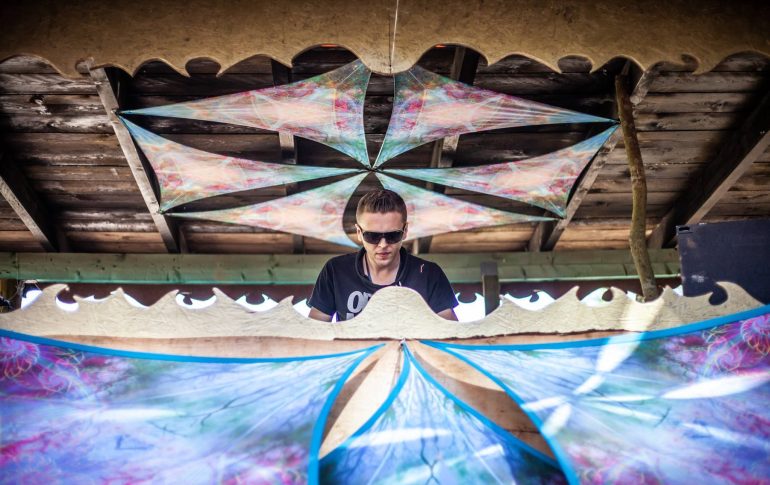
Behind the Waveform project is Nazar Iogkanson, a Greece-based progressive psytrance producer whose relationship with electronic music began at the age of 13. After releasing his first tracks in 2012, he went on to develop a sound rooted in hypnotic trance, psychedelic influences and deep atmospheric sound design.
For Waveform, music is about creating an experience rather than simply producing tracks. His creative process begins with feeling, allowing emotion and atmosphere to guide the sounds that follow. Away from his primary project, Iogkanson also explores a more psychedelic full-on direction through his second project, Chronosphere.
We caught up with Waveform to discuss his creative process, the environments that inspire him, his approach to collaboration, the role of technology and AI in music, and why staying curious remains central to his artistic journey.
How would you describe your musical style and the genres or subcultures that most influence your sound?
My music sits somewhere between hypnotic trance, psychedelic influences, and deep atmospheric sound design.
Describe the primary setting or environment where your music is conceived. Is it a chaotic, overstimulating studio, a minimalist digital space, a rehearsal room, or a more isolated location?
Most of my music is created in a relatively isolated and controlled environment. I like having a space where I can completely focus without distractions, because my creative process relies on getting into a deep state of concentration.
The studio itself is fairly minimalist. It’s less about having endless gear and more about having the right tools within reach.
When you create, what leads the way – a feeling, a story, or the sound itself?
It almost always starts with a feeling. I usually have an emotion or atmosphere in mind before anything else, and the sounds become the language to express it.
Sometimes a single texture or groove sparks an idea, but I’m always trying to build an experience that takes the listener somewhere rather than just making a collection of tracks.
What’s in your toolkit? Share the gear, gadgets, or software you can’t create without.
At the heart of my workflow is Logic Pro, which acts as the creative hub for everything I produce.
I rely on a combination of software synths, carefully selected effects, and field recordings to build textures and atmosphere, while my monitoring setup is essential for making precise decisions throughout the process.
Are there any unexpected or dream collaborations hidden in your work?
Yes. At the moment, I’m working with Ikon on a new track that will be released on his new album very soon.
Are there any side projects you’re working on?
Yes, I have my second project, Chronosphere, which is more focused on psychedelic full-on.
Who’s an emerging artist you think deserves more recognition right now?
I have to say myself.
Not because I think I’ve already made it, but because I genuinely believe in what I’m building. I’ve spent years developing my sound, refining my craft, and staying true to my artistic vision rather than chasing trends.
What role does ‘rebellion’ or ‘counterculture’ play in your music? Are you aiming to challenge commercial norms, sonic structures, or societal expectations?
For me, rebellion isn’t about being controversial for the sake of it. It’s about staying true to an artistic vision instead of following algorithms or commercial expectations.
I want my music to encourage people to slow down, lose themselves in the moment, and experience something authentic.
Who is one non-musical artist whose work feels sonically synonymous with your sound?
James Cameron.
What aspects of your artistry feel most important to you, such as your sound, visuals, storytelling, or live performance style?
The sound always comes first because it’s the foundation of everything I do. But I also see visuals and live performance as extensions of that sound.
I want every element to contribute to the same atmosphere and emotional journey. Whether it’s a club, a warehouse, or a festival stage, my goal is to create an immersive experience that people remember long after the set ends.
What is the most exciting and the most concerning technological development impacting the music industry right now?
AI is probably both the most exciting and the most concerning development.
It’s an incredible creative tool that can speed up workflows, inspire new ideas, and make production more accessible. At the same time, there’s a risk that music becomes oversaturated with algorithmically generated content, making originality and human expression harder to recognise.
I think technology should enhance creativity, not replace the personal experiences and emotions that make music meaningful.
How would you describe the live music environments you feel most connected to? Are you drawn more to massive festival stages, underground warehouse parties and DIY venues, or a mix of both?
I enjoy both because they offer completely different experiences.
Underground venues and warehouse parties have a unique intimacy where the connection between the DJ and the crowd feels incredibly direct. Festivals, on the other hand, have an unmatched energy and allow you to share music with thousands of people at once.
Ideally, I want to be part of both worlds while staying true to the underground spirit that inspired me in the first place.
Famous last words?
Stay curious. Keep questioning, keep exploring.
Listen to the exclusive mix with Waveform on PLAYY. Music
Follow Waveform:
YouTube – Spotify – Facebook – Instagram – SoundCloud